

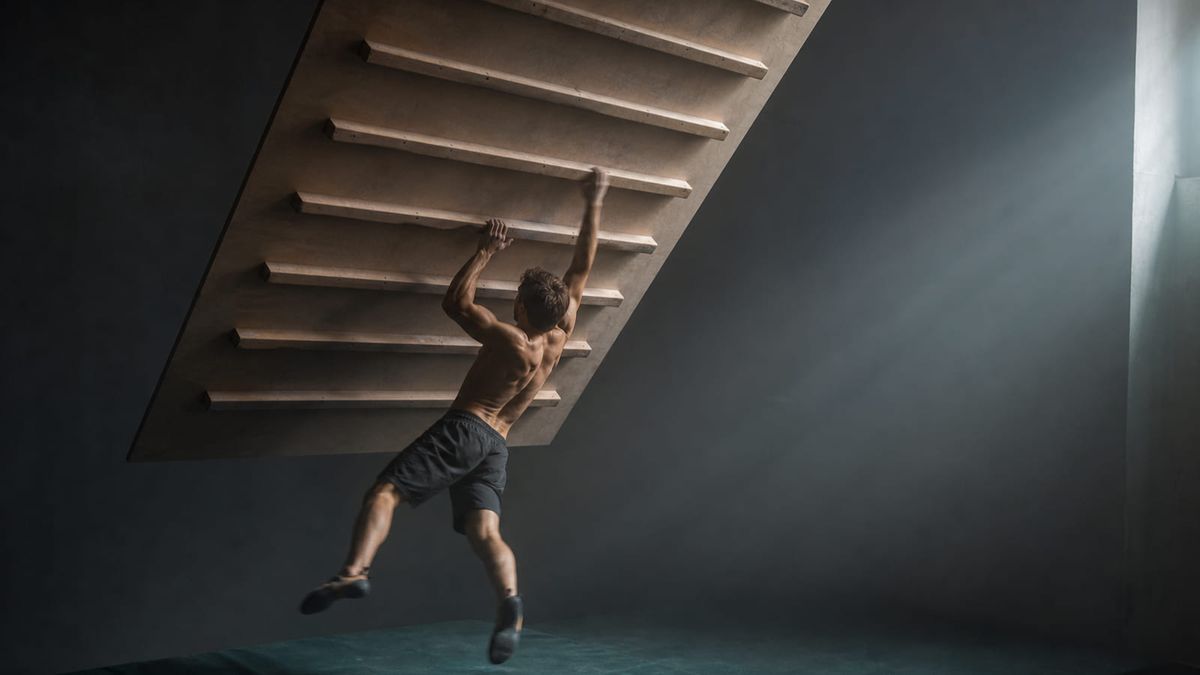
For almost every boulderer, the answer is the hangboard. A hangboard builds maximum isometric finger strength, the single best predictor of grade, and it suits anyone with about a year of climbing behind them. A campus board builds explosive contact power, but it is a high-risk tool that only pays off once a strong base already exists.
Key takeaways
- Wolfgang Güllich built the first campus board in 1988, while he was already climbing 5.14: it was designed for elite power, not for base strength.
- The consensus benchmark from the BMC, Eric Hörst and Neil Gresham is at least two years of climbing and hangboarding plus roughly V6/7 before any feet-off campusing.
- The hangboard is the tool for maximum finger strength and suits climbers from about 1 year in, which is why it comes first in every sensible sequence.
- The evidence base is young: the first scientific analysis of campus training appeared only in 2021, and the UIAA and BMC advise no feet-off campusing before growth plates close at age 18.
Different tools, different jobs
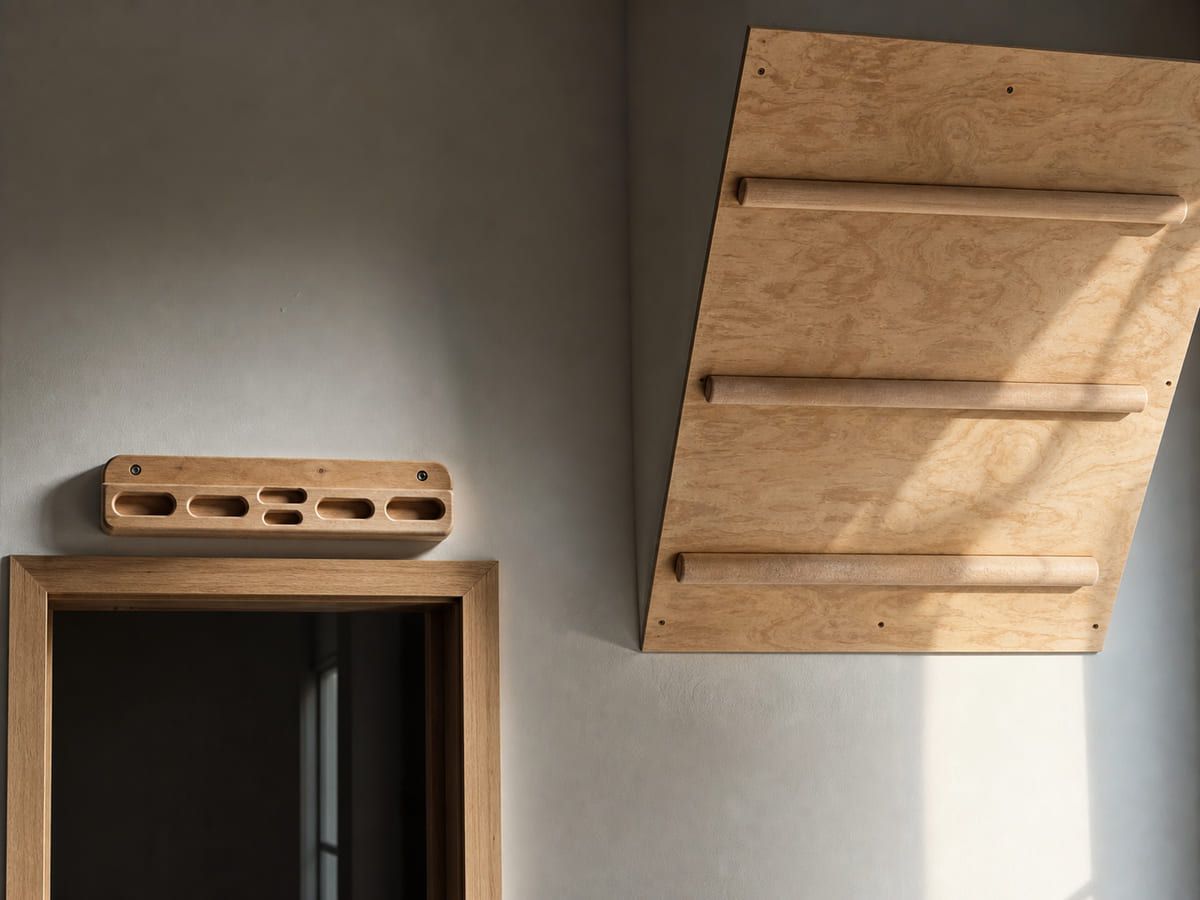
A hangboard trains the force you can hold; a campus board trains the force you can produce and catch. The hangboard works isometrically: you load an edge, nothing moves, and the adaptation is maximum static finger strength plus strength-endurance. The campus board is reactive and dynamic. You release one rung and catch the next at speed, and the quality it builds is contact strength, meaning how much force your fingers can express in the fraction of a second after they land.
Those are different qualities, and for most climbers only one of them is the actual limiter. Maximum finger strength is the more fundamental of the two, because contact power is force expressed quickly, and you cannot express force quickly that you do not have in the first place. A climber who can hold a small edge in a controlled hang and still misses the catch has a power problem. A climber who cannot hold the edge at all has a strength problem wearing a power costume.
The hangboard’s methods are well defined and well documented: max hangs, repeaters and density hangs, each with its own intensity and rest structure, all covered in the full hangboard protocol guide. The campus board has no equivalent library. The first scientific analysis of campus training appeared only in 2021, which means almost everything written about campusing before then was accumulated coaching experience rather than evidence, and it should be read that way.
The common mistake is treating the campus board as a harder hangboard. It is not the next rung on the same ladder, it is a different exercise with a different failure mode. A hangboard fails you by making the set impossible, and you drop off. A campus board fails you by making the catch impossible, and your fingers absorb the miss at full speed.
When (if ever) you need a campus board
Wolfgang Güllich built the first campus board in 1988, while he was already climbing 5.14. That context is most of the argument. The tool was invented by an elite climber who had run out of ways to get more powerful, on top of a base that had taken years of hard climbing to assemble. It was never a shortcut to finger strength, and it was never designed for anyone who still had finger strength left to gain the ordinary way.
Modern guidance arrives at the same place from a different direction. The consensus benchmark from the BMC, Eric Hörst and Neil Gresham: no feet-off campusing until you have climbed and hangboarded for at least two years and can boulder around V6/7. Below that, a campus board mostly adds injury risk for very little return, because the quality it trains is not the one holding you back.
Both halves of that rule are doing work. The two-year requirement is about tissue: tendons and pulleys adapt more slowly than muscle, and two years of accumulated finger load is roughly what it takes before connective tissue tolerates being loaded fast rather than only being loaded hard. The V6/7 requirement is the performance half of the same test, evidence that there is enough base strength on hand to convert into power. Hitting one without the other is not a pass.
When you do start, start feet-on and on the biggest rungs. Feet on the wall carry part of your body weight, so the fingers catch a fraction of the load, and large rungs give the largest possible contact area for the hand that lands. Those are the training-wheel settings on an advanced tool, and the fact that they exist is not permission to skip them. How training priorities shift across experience levels is the subject of the beginner and advanced plan comparison.
The risk profile
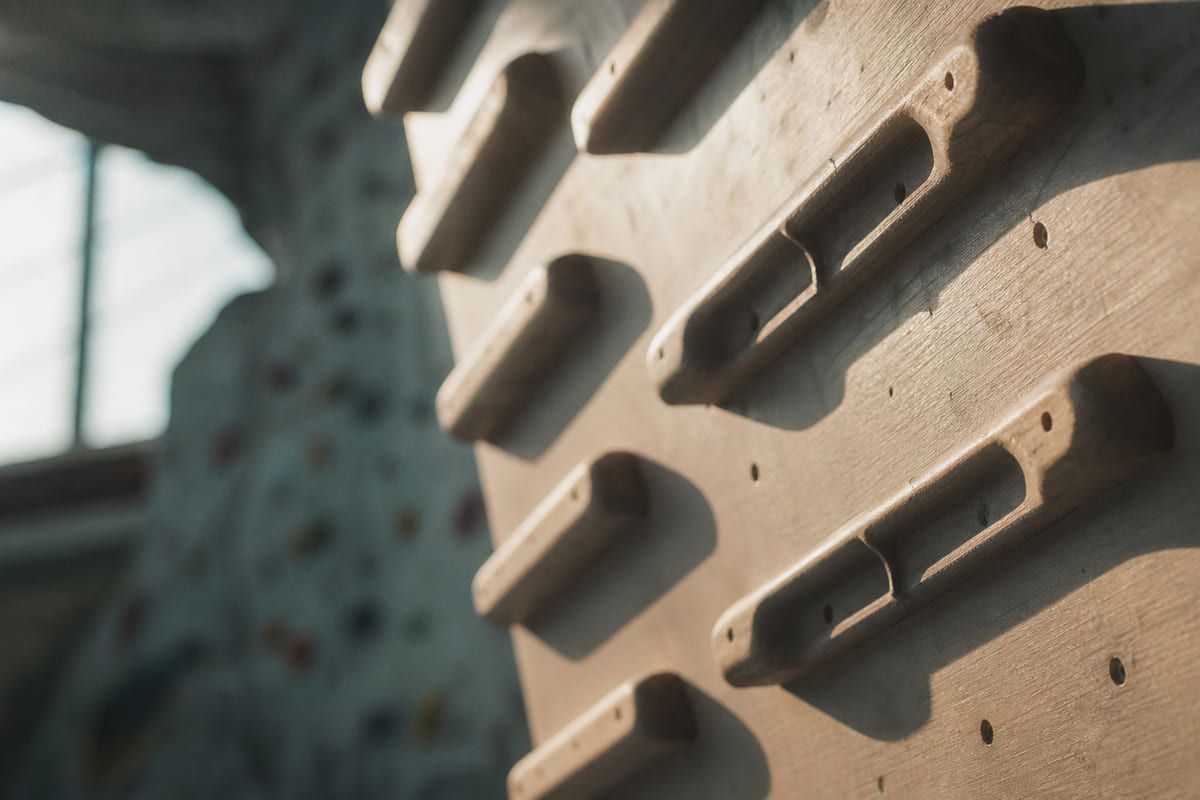
The campus board loads fingers ballistically, at high velocity, and that is exactly the load pattern that ruptures pulleys. Catching a rung is an eccentric event. The hold stops your body, your fingers decelerate your whole mass in a few hundredths of a second, and the peak force arrives long before you could do anything about it. A hang builds toward its peak over a second or more, which gives you time to reposition or step off. A campus catch simply spikes.
Elbows and shoulders absorb the same spike. Every rung you catch sends a fast load up the chain, and the tissues that were fine under slow, heavy, controlled hangs are being asked for something categorically different. Finger pulleys take the worst of it, and what those injuries look like, how they are graded, and how long they take to come back is covered in the guide to finger pulley injuries.
Age matters as well. The UIAA and BMC advise no double-dyno or feet-off campusing before growth plates close, around age 18, because growth cartilage is the weak link in a young climber’s skeleton and it responds badly to fast, repeated, high-magnitude load. A strong 16-year-old can generate forces their skeleton is not finished being able to carry.
Then there is fatigue, which is where most campus injuries actually happen. Stop well before you are tired. As the standard warning about campus training has it, results come quickly, but so do injuries. The mechanism is unglamorous: as your fingers fatigue, your catch position degrades, and the rung you meant to take in a controlled open-ish position becomes a crimp you fall into instead. The set that hurts you is almost never the first one.
How to choose
Below roughly V6 or under two years of climbing: hangboard only. Solid V6/7 with a genuine power or contact-strength weakness: add limited campus work, feet-on and on big rungs, inside a structured power phase. Never use a campus board to build base finger strength, because that is the hangboard’s job and the campus board does it badly and expensively.
| Hangboard | Campus board | |
|---|---|---|
| Trains | Max isometric finger strength, strength-endurance | Reactive power, contact strength |
| Contraction | Static, controlled | Dynamic, ballistic, catching at speed |
| Ready at | ~1 year of climbing | ~2 years plus ~V6/7 |
| Starting setting | Big edge, no added weight | Feet-on, biggest rungs |
| Main risk | Slow overload of tendons and pulleys | Fast eccentric spikes: pulleys, elbows, shoulders |
Be honest about the diagnosis before you buy the tool. “I lack power” is one of the most over-diagnosed weaknesses in bouldering, and the test is simple: if the moves you fail are ones where you never held the hold at all, that is strength, not power. Power is what fails when you latch the hold and cannot keep it. If the answer is the hangboard, the wider menu of loading options is in the five finger-strength exercises worth programming.
If you clear both thresholds, campus work belongs in a defined block rather than sprinkled through the week. Low volume, early in the session, on completely fresh fingers, and never on top of a hard bouldering day. Fitting a power phase into the rest of a year is a planning question, and a structured bouldering training plan is where that decision gets made.
Sources
- British Mountaineering Council / Climbing.com campus board guidance: no feet-off campusing before “at least two years” of climbing and “approximately V6/7”; Wolfgang Güllich built the first campus board in 1988.
- UIAA / BMC youth training guidance: no double-dyno or feet-off campusing before growth plates close (age 18).
Common questions
Do I need a campus board?
Most climbers do not. A campus board trains explosive contact power, which only pays off on top of a strong finger base, so hangboard first. Add campus work only after roughly two years of climbing and hangboarding and a solid V6/7 bouldering level, and only inside a structured power phase.
When can I start campus board training?
The consensus benchmark from the BMC, Eric Hörst and Neil Gresham is at least two years of climbing and hangboarding plus roughly V6/7 bouldering before any feet-off campusing. Start feet-on, on the biggest rungs, in low volume. The UIAA and BMC also advise no feet-off campusing before age 18.
Which builds finger strength, a campus board or a hangboard?
The hangboard. It trains maximum isometric finger strength under controlled, measurable load, and that is the more fundamental quality for most climbers. A campus board trains reactive power, meaning the ability to catch a hold at speed. Using a campus board to build base finger strength is the classic mistake.
Is campus board training dangerous?
It carries higher risk than hangboarding. Campus moves are ballistic and high-velocity, the eccentric load pattern that ruptures finger pulleys and stresses elbows and shoulders. Campus training suits experienced, warm, non-fatigued fingers only, in low volume and inside a plan. Stop well before fatigue arrives.

Jan Luther is a climber and the developer behind Boulder Trainer, the hangboard app with guided workouts, voice coaching and a habit tracker.
Keep reading
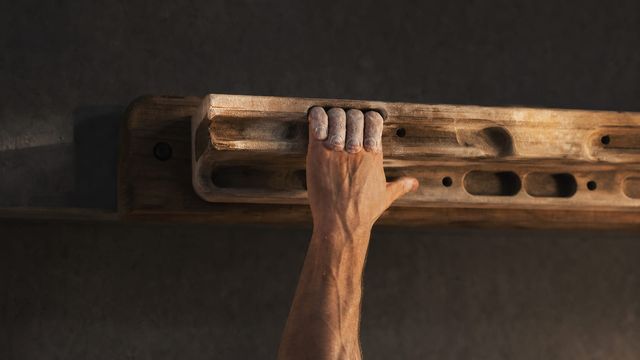
Hangboard Training: The Complete Guide for Boulderers
Everything a boulderer needs to train fingers safely: the three main hangboard methods, the research behind them, load and edge guidelines, and a beginner-safe first protocol.
Finger Strength Training: 5 Best Exercises for Climbers
Finger strength is the single best predictor of climbing grade. Here are the five exercises with the strongest evidence — and how to program them safely.